
One in Five Students are Parenting
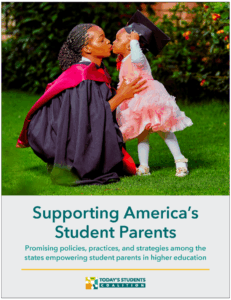
One-fifth of college students are parents. That’s more than three million undergraduates balancing classes, homework, jobs, and caregiving to build better futures. But higher education wasn’t designed for them, and it shows: student parents are far less likely to complete their degrees than peers without children.
Parents pursuing postsecondary education and training face multiple challenges. Additional expenses like child care and more costly housing make college costs significantly higher for student parents. They also face higher rates of food insecurity than their peers without children Yet, trends among the GPAs of parenting (3.17) and non-parenting students (3.15) show student parents earn comparable grades to non-parenting peers. When the right investments are made, student parents can succeed.
Student-Parent-Friendly State Policies
TSC’s Supporting America’s Parenting Students is a scan of promising policies states are implementing to support the over 51% of student parents attending community and technical colleges in achieving graduation. The brief examines the following state policy levers known by researchers as major contributors to student parent success:
- Supporting access to child care
- Strengthening campus-based supports
- Providing financial aid and support programs
- Connecting student parents to public benefits
- Streamlining data collection to inform policy
- Targeting student parents within broader student housing policies
States featured throughout this brief aren’t just national leaders because they’ve passed student-parent-friendly policies—they’ve gone further. Many have prioritized listening to the voices of the students, recognizing the return on investment: stronger families, a more skilled labor force, and more equitable educational outcomes.
Related Resources
Please find the related resources to the post above.
-
September is for Student Parents
Five Years Celebrating National Student Parent Month -
Support Student Parents website
Learn more at www.supportstudentparents.org -
DC Student Summit
where today’s students from around the country become civic leaders